
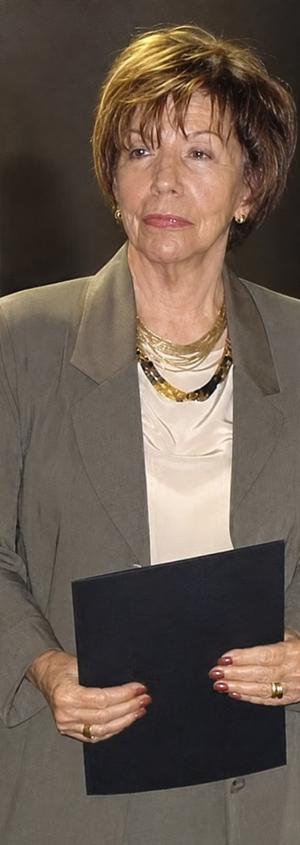
Elza Salvatori Berquó passed away on July 16, 2026, at the admirable age of 100. She became an IUSSP member in 1968. She served on the IUSSP Committee on Family Demography and the Life Cycle I (1982-1984) chaired by John Bongaarts with Thomas Burch, Kenneth Wachter, Gustave Feichtinger, and Hervé Le Bras and she served on the follow up Committee on Family Demography and the Life Cycle II (1985-1988) with Charlotte Höhn, who she replaced as Committee Chair, Louis Roussel, Peter Xenos and Jan Trost. She co-edited with Peter Xenos a volume of the results of Committees’ work in Family Systems and Cultural Change (1992) in the IUSSP International Studies in Demography series published by Oxford University Press.
(Portuguese version below)
She lived through a century breaking barriers and clearing the path for research that shaped Demography in Brazil and Latin America. For the national and international demographic community, Elza was an intellectual mentor, a striking presence, and irreplaceable. She dedicated nearly eight decades to academic life, leaving behind a scientific and social legacy.
Graduating in Mathematics from the Pontifical Catholic University of Campinas in 1947, she earned her Master's degree in Statistics from the University of São Paulo in 1949. At age 26, in 1951, she achieved her habilitation (livre-docência) in Biostatistics at the University of São Paulo. She later obtained her PhD in Biostatistics from Columbia University in 1958.
She founded institutions focused on the development of Demography in Brazil. In the 1960s, she created the Center for Population Dynamics Studies (Cedip) at USP, the first Brazilian demography center. She was removed from the university during the military dictatorship and stripped of her rights under Institutional Act No. 5. In the fight for democracy, Elza was one of the founders of the Brazilian Center for Analysis and Planning (Cebrap) in 1969. In 1976, she led the creation of the Brazilian Association for Population Studies (Abep) and, in 1982, the Population Studies Center at the State University of Campinas, which today bears her name. She played a decisive role in establishing the National Commission on Population and Development in Brazil in 1995, following her prominent and influential participation in the 1994 Cairo International Conference on Population and Development.
Her research, marked by deep scientific rigor and a commitment to public policy, pioneered Brazilian studies on fertility, nuptiality, demographic transition, infant mortality, maternal mortality, families, gender, race, and reproductive health. With equal vigor, she demonstrated an immense vision for emerging themes in population studies: youth, aging, international migration, employment, indigenous peoples, suicide, among others.
Elza intimately shared her life and story when we organized the publication of her photobiography in 2019 and 2023. With warmth and professionalism, we spent hours immersed in her visual memories, personal history, archives, and home. We had the privilege of closely examining images of her journey and crucial moments—at the forefront—of international conferences and social policy formulation. Her life, dedicated to science, democracy, and social justice, was reflected in the emotions she lived and conveyed to different generations of Brazilian demographers.
We miss her presence deeply, but we will continue to look to Elza Berquó for inspiration to preserve her legacy and our identity as demographers.
“I don't live in the past, and I believe old paths don't work. You have to keep a free and open mind to find new inspiration.”
Elza Berquó (2023)
Contributed by Rosana Baeninger
For more on Elza Berquó’s remarkable life and work, we invite you to explore the beautifully produced collections below, which bring together photographs, artwork, press clippings, interviews, and other materials documenting her life and career.
Photobiography Publications:
Em português:
Elza Salvatori Berquó faleceu em 16 de julho de 2026, à admirável idade de 100 anos.
Atravessou um século de vida rompendo barreiras e abrindo caminhos para pesquisas que moldaram a Demografia no Brasil e na América Latina. Para a comunidade demográfica nacional e internacional, Elza foi mentora intelectual, presença marcante e insubstituível. Dedicou cerca de oito décadas à vida acadêmica, deixando um legado científico e social.
Graduada em Matemática pela Pontifícia Universidade Católica de Campinas em 1947, obteve o mestrado em Estatística na Universidade de São Paulo, em 1949. Aos 26 anos, em 1951, tornou-se livre-docente em Bioestatística pela Universidade de São Paulo. Seu doutorado foi em Bioestatística pela Columbia University, em 1958.
Fundou instituições voltadas para o desenvolvimento da Demografia no Brasil; na década de 1960, criou o Centro de Estudos de Dinâmica Populacional (Cedip) na USP, o primeiro centro de Demografia brasileiro. Foi afastada da Universidade durante a ditadura militar e cassada pelo Ato Institucional nº 5. Na luta pela democracia, Elza foi uma das fundadoras do Centro Brasileiro de Análise e Planejamento (Cebrap), em 1969. Em 1976, liderou a criação da Associação Brasileira de Estudos Populacionais (Abep) e, em 1982, o Núcleo de Estudos de População da Universidade Estadual de Campinas, que hoje leva seu nome. Teve decisiva participação na criação da Comissão Nacional de População e Desenvolvimento, no Brasil, em 1995, após destacada e influente a atuação na Conferência Internacional sobre População e Desenvolvimento do Cairo em 1994.
Suas pesquisas - com profundo rigor científico e compromisso com as políticas públicas - foram pioneiras no Brasil nos estudos de fecundidade, nupcialidade, transição demográfica, mortalidade infantil, mortalidade materna, transição demográfica, famílias, gênero, raça, saúde reprodutiva. Com o mesmo vigor, demonstrou imensa capacidade para vislumbrar temas emergentes nos estudos de população: juventude, envelhecimento, migração internacional, emprego, povos indígenas, suicídio, dentre outros.
Elza abriu sua vida e sua história intimamente ao organizarmos a publicação de sua fotobiografia, em 2019 e em 2023. Com afetividade e profissionalismo, passamos horas mergulhadas em suas memórias visuais, em sua história pessoal, nos seus arquivos, na sua casa. Pudemos olhar de perto para as imagens de sua trajetória, para momentos importantes e decisivos - em posição de vanguarda- em conferências internacionais e na formulação de políticas sociais. Sua vida dedicada à ciência, à democracia e a justiça social se refletiram nas emoções vividas e transmitidas por Elza Berquó para diferentes gerações da Demografia brasileira.
Sua presença nos faz muito falta, mas seguiremos buscando em Elza Berquó inspiração para permanência de seu legado e de nossa identidade como demógrafas e demógrafos.
“Não vivo de passado e acho que velhos caminhos não funcionam.
É preciso manter a mente livre e aberta para ter novas inspirações.”
Elza Berquó
Contribuição de Rosana Baeninger
Para saber mais sobre a vida e obra notáveis de Elza Berquó, convidamos você a explorar as coleções primorosamente produzidas abaixo, que reúnem fotografias, obras de arte, recortes de imprensa, entrevistas e outros materiais que documentam sua vida e carreira.
Publicações da Fotobiografia: