
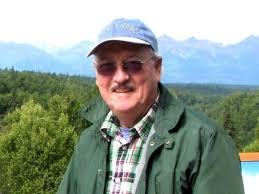
We are saddened to report the death of Thomas W. Merrick on 18 March 2026. An IUSSP member since 1968, he was a distinguished economist and demographer whose work helped shape the study of population and development in Latin America and beyond.
Born in Omaha, Nebraska, in 1939, Merrick earned a Ph.D. in Economics from the University of Pennsylvania, where he developed a lifelong interest in the relationship between demographic change and economic development. Early in his career, he worked as an economist for the U.S. Agency for International Development and later held teaching and research appointments at several institutions, including Georgetown University, the University of Pennsylvania, George Washington University, and the Federal University of Minas Gerais (UFMG) in Brazil. Merrick served as President of the Population Reference Bureau and as Senior Adviser for Population and Reproductive Health at the World Bank.
Tom Merrick played an important role in the development of demographic research and training in Brazil. In the early 1970s, he joined the Centre for Development and Regional Planning (CEDEPLAR) at UFMG during the formative years of its demographic programme. His presence, made possible through support from the Ford Foundation, contributed significantly to the establishment of CEDEPLAR as an internationally recognized centre for population studies. He was also among the participants in the early efforts to strengthen demographic training and research in Latin America, helping to foster a generation of scholars and institutions that would shape the field in the region.
His research focused on fertility change, population dynamics, and economic development. He co-authored Population and Economic Development in Brazil (1979), with Douglas Graham, a landmark analysis of Brazil’s demographic transformation that remains an important contribution to Brazilian and Latin American demography. He also collaborated with Elza Berquó on pioneering research that brought international attention to fertility decline in Brazil.
Later in his career, Merrick served as President of the Population Reference Bureau and as Senior Adviser for Population and Reproductive Health at the World Bank. He has served on boards and consultancies for UNFPA, the Ford Foundation, the Macarthur Foundation, the Hewlett Foundation, the American Public Health Association, and the National Academy of Sciences.
Throughout his professional life, he was known for bridging economics, demography, and public health and for his commitment to evidence-based policy and international collaboration.
Colleagues remember Tom Merrick not only for his intellectual contributions but also for his generosity, kindness, and collegial spirit. His influence on demographic research, particularly in Brazil and Latin America, and his longstanding engagement with the international population community leave a lasting legacy.
TOM MERRICK by Eduardo L.G. Rios-Neto
I knew Merrick from a few encounters at scientific events such as the PAA and IUSSP meetings. He was a true gentleman, among the most cordial that I ever met. He treated me as something of a grandson, given his foundational role in Cedeplar´s demography and the fact that his Penn student, Paulo Paiva, was my master´s thesis advisor. His 1979 book with Douglas Graham, Population and Economic Development in Brazil, is the best economic/historical demography account of Brazilian demographic dynamics until the end of the third quarter of the twentieth century. Merrick published a book with Elza Berquo in 1983 that was a pioneering work in highlighting fertility decline to the English-speaking public; it was also a pioneer in the use of microdata. In terms of my own doctoral dissertation, I was influenced by his application of Easterlin´s bequests/land availability hypothesis to the Brazilian case, as published in Demography (1978) and Research in Population Economics (1981). His paper on piped water and early childhood mortality, published in Demography (1985), was also key to micro-macro modeling of mortality. An influential and pioneer modern demographer to the Brazilian studies that will be missed.