
An introduction to the analysis of population-level kinship structuresMumbai, India, 24-27 November 2025
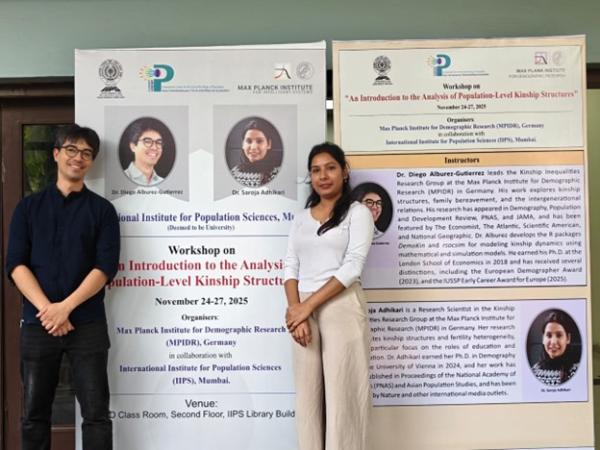
Together with the Kinship Inequalities Research Group of the Max Planck Institute for Demographic Research (MPIDR), the IUSSP Scientific Panel on Kinship Structures, Dynamics and Inequalities organized a four-day workshop on the introduction to the analysis of population-level kinship structures. The workshop was held at the International Institute for Population Sciences (IIPS) in Mumbai, India, from 24 to 27 November 2025.
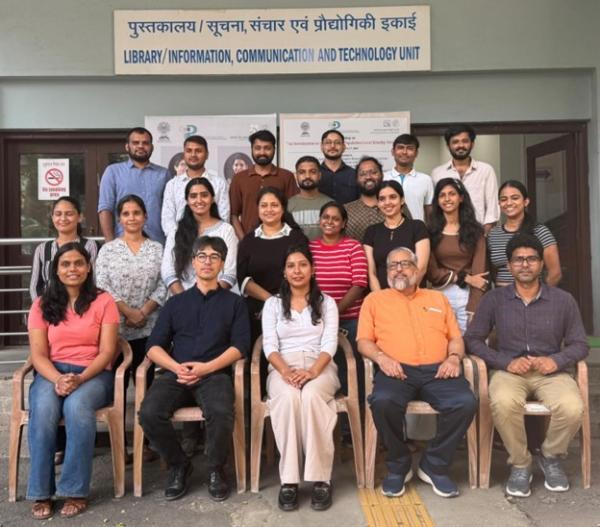
The primary objective of the workshop was to introduce participants to contemporary theoretical and methodological approaches to kinship analysis, with a focus on their empirical application using demographic data. The training was led by Dr. Saroja Adhikari (Research Scientist) and Dr. Diego Alburez-Gutierrez (Research Group Leader), both affiliated with the Kinship Inequalities Research Group at MPIDR and the IUSSP panel. A total of 20 doctoral researchers in demography participated in the workshop.
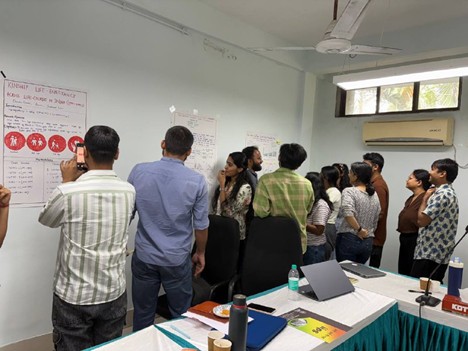
The program combined lectures, guided discussions, and hands-on exercises. A central component of the training was the use of “DemoKin” R package, which models population-level kinship structures using aggregate fertility and mortality rates. Through practical exercises, participants developed skills in estimating kinship size and structure, interpreting model outputs, and applying these methods to demographic datasets. On the final day, participants developed short research poster proposals that applied the workshop concepts and tools. Working in small groups, participants designed mini research projects and presented their work to peers and instructors. The feedback sessions focused on methodological design, feasibility, and potential research contributions. This activity helped participants translate theoretical knowledge into practical research applications, deepening their understanding of kinship modeling techniques.
Overall, the workshop strengthened participants’ analytical capacity in kinship research and fostered an active, collaborative learning environment.
|