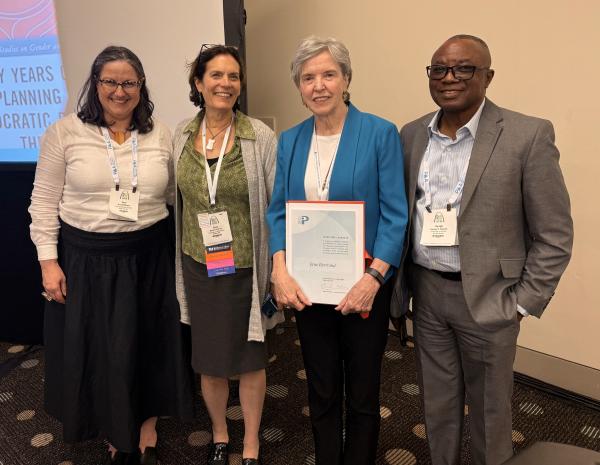
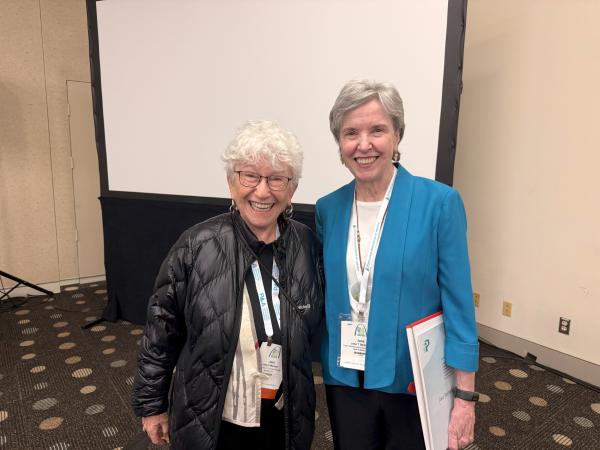
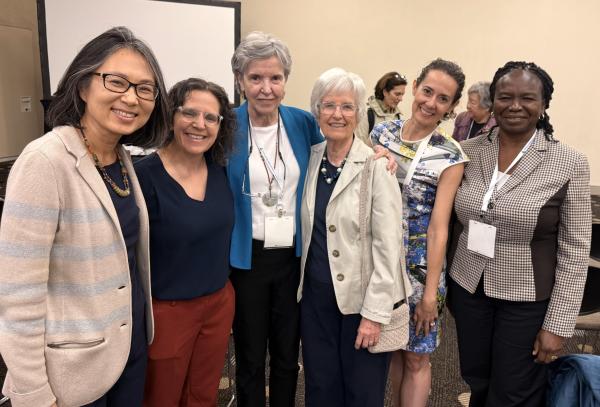
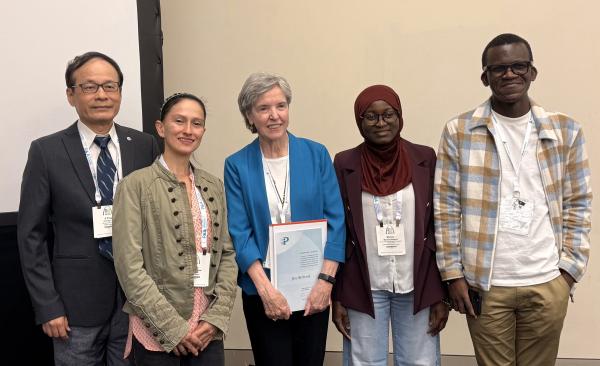
Jane Bertrand - 2026 Laureate
The Laureate Award ceremony will be held on Thursday 7 May 2026 from 5:30 to 6:30 pm at the 2026 PAA Annual Meeting in St. Louis, Missouri in America’s Center, Room 101.
A virtual ceremony will also be held later this year for those unable to attend the ceremony in St. Louis.
For details on Jane Bertrand's accomplishments and contributions to the population field please read the letter of nomination
Nomination for Jane Bertrand:
It gives us great pleasure to write this nomination letter for the IUSSP Laureate Award in support of Dr. Jane Bertrand, the Neal A. and Mary Vanselow Professor in the Department of Health Policy and Management at Tulane University’s School of Public Health and Tropical Medicine. She holds a B.A. in French Studies from Brown University (1971), a Ph.D. in Sociology from The University of Chicago (1976), and an MBA from Tulane University (2001).
Dr. Bertrand’s career has focused on program design and evaluation, community-based family planning service delivery, operations research, behavior change communication, and advocacy. Below we briefly summarize Jane’s many contributions to the field of family planning and reproductive health.
Employment History:
Before joining Tulane University in July 1979, Jane was Assistant Director and Research Associate at the Community and Family Study Center, University of Chicago. From 1986-1989, she was Resident Advisor for the Tulane Family Planning Operations Research Project in Kinshasa, Zaire (now DRC). Jane rose through the academic ranks in various departments of the Tulane School of Public Health and Tropical Medicine before becoming a Full Professor in 1992. She has served as Chair of the Department of International Health and Development (1994-1999) and of the Department of Health Systems Management, which went through several mergers and name changes, from 2009-2016. Jane is currently the Neal A. and Mary Vanselow Professor in the Department of Health Policy and Management at Tulane University’s School of Public Health and Tropical Medicine. In addition to her positions at Tulane University, Jane has held academic positions in the Department of Population Dynamics and Family Health Sciences (2001-2006) and the Department of Health Behavior and Society (2006-2009) at Johns Hopkins University, Baltimore, Maryland. Since 2009, she has continued to serve as Adjunct Professor in the later department.
Research:
Jane’s career demonstrates a profound commitment to the application of rigorous scientific research to family planning and reproductive health policies and programs for vulnerable sub-populations in some of the poorest countries in the world. She began her work in Latin America, and later expanded to sub-Saharan Africa, with a focus on the DRC. In both contexts, Jane’s research has made an indelible mark on the field by providing a better understanding of how to increase access to quality family planning and reproductive health services. Regarding scholarship, even a cursory look at a citation index like Web of Science gives one a sense of Jane’s distinguished record of scholarly publications.
As her curriculum vitae indicates, Jane’s early research in Colombia, El Salvador, and Guatemala, examined family planning communication and contraceptive use, correlates of contraceptive use among the urban poor, characteristics of successful community-based distributors of contraceptives, ethnic differences in family planning acceptance, family planning communication, and the cost-effectiveness of programs for voluntary surgical sterilization. Based on this experience, Jane was commissioned by USAID/Washington, through the MEASURE Evaluation Project, to write a report examining the specific role of family planning in accelerating fertility decline in Latin America and the Caribbean, a region that has witnessed a steady increase in contraceptive use and a significant decline in fertility since the mid-1960s: Bertrand JT, VM Ward, Santiso-Galvez R, 2015. Family Planning in Latin America and the Caribbean: The Achievements of 50 Years. Chapel Hill, NC: MEASURE Evaluation, 2015.
In sub-Saharan Africa, specifically in the DRC, Jane’s research has focused on identifying and seeking practical solutions to problems with the routine operations of national family planning programs, including innovative strategies for contraceptive provision, and use of research as an advocacy tool to strengthen the sexual and reproductive health and rights environment. Her research has provided program managers and policy makers with the information they need on impact, cost-effectiveness, quality, and acceptability of specific contraceptive methods to clients to improve, scale-up and sustain family planning service delivery approaches. Jane has published extensively in major journals, including International Family Planning Perspectives, Studies in Family Planning, Contraception, Health Policy and Planning, BMC Women’s Health, Lancet, Global Health Science and Practice, Evaluation Review, and PLOS One.
Jane’s recent work is a book entitled Fifty Years of Family Planning in the Democratic Republic of the Congo: The Dogged Pursuit of Progress, which will be published by Routledge. This book chronicles five decades of struggle to introduce family planning into one of the most fragile countries in sub-Saharan Africa. It provides a rare history of the many initiatives – supported largely by international donors – to improve access to contraception and increase demand for its use over the 50-year period since President Mobutu Sese Seko launched the Programme des Naissances Désirables (desirable births program) in 1972. While interweaving details of the major political, social, and economic events of the time into the history of family planning in Zaire/DRC, the book analyses the successes and setbacks over five decades of programmatic work. It concludes by linking historical events with current day contraceptive practices; addressing a series of provocative questions related to donors and funding; and identifying conditions needed to maximize progress in family planning in the DRC in the future.
Program and Policy:
Jane’s pioneering work of family planning measurement and evaluation has had tremendous impact on funders, program managers, policy makers, and researchers throughout the globe by helping to support and strengthen the monitoring and evaluation of family planning and reproductive health programs.
Faced with the necessity to improve country-level capacity to provide and use family planning and reproductive health information and in response to the increasing data needs among the global donor community for program accountability, Jane led the development of several indicator compendia that have highlighted the importance of family planning and reproductive health information as a public good. These compendia have been critical for achieving international and national consensus of monitoring and evaluation frameworks to clarify how programs operate to achieve their desired results, encouraged the consistent use of standardized indicators across the family planning/reproductive health community, made family planning and reproductive health indicators better known and easier to use in the academic and non-academic communities, and highlighted the advances made in and enduring challenges of family planning measurement.
Some of Jane’s seminal work in this regard includes the 1994 Handbook of Indicators for Family Planning Programs (Bertrand, Magnani, and Knowles) and the 1996 Evaluating Family Planning Programs with Adaptations for Reproductive Health (Bertrand, Magnani, and Rutenberg). Both publications have been translated into French and Spanish and are widely used in reproductive health programs throughout the world. The handbooks set the foundation for the 2002 Compendium of Indicators for Evaluating Reproductive Health Programs (Bertrand and Escudero), a response to the broadening of the field of reproductive health to include not just family planning but also safe motherhood, STI/HIV/AIDS, women’s nutrition, breastfeeding, postabortion care, female genital cutting, violence against women, and male involvement in reproductive health programs. In 2001, Jane also led the development, testing, and refinement of a low cost, practical methodology for measuring quality of care in family planning services on a regular basis. Known as Quick Investigation of Quality (QIQ): A User’s Guide for Monitoring Quality of Care in Family Planning, this set of instruments struck a chord in countries around the world by highlighting the importance of measuring whether quality services were being delivered to women seeking family planning and other reproductive health services. The QIQ also renewed research interest on how the quality of care received by the client may in turn increase client satisfaction, and modern contraceptive use and continuation.
To grow and sustain the family planning program in the DRC, Jane has secured over $53 million in the past 14 years as lead for some of Tulane University’s largest and most influential multi-year research awards from a variety of funding sources, such as USAID, the Bill & Melinda Gates Foundation, the David and Lucille Packard Foundation, the United Nations, and most recently, FONAREDD/CAFI (with funds from the Norway government). In the DRC, she has worked closely with local partners (e.g., Cadre Permanent de Concertation de la Femme Congolaise) to increase government commitment to family planning and assisted in guiding the text for the revised Public Health Law, authorizing access to contraception for all persons of reproductive age, through multiple legal and regulatory channels, until its successful adoption in 2018. Advocacy efforts supported by her Advance Family Planning grant resulted in the 2021 release of $2M by the DRC government for contraceptive procurement. Through Jane’s leadership, Tulane University played a key role in the development of the DRC National Multisectoral Strategic Plan for Family Planning: 2014-2020 and contributed to the subsequent National Strategic Plan, 2021-25.
Jane’s signature achievement for the family planning program in the DRC has been the pilot testing of innovative strategies for improving service delivery, which have translated into changes in service delivery policies. Through the AcQual I, II and III projects, Jane directed a large-scale community-based distribution (CBD) project in Kinshasa and Kongo Central, initially with non-clinical community health workers (CHW), but subsequently with nursing students and recent nursing graduates. Her research papers entitled “Acceptability of the community-level provision of Sayana® Press by medical and nursing students in Kinshasa, Democratic Republic of the Congo” (published in Contraception in 2017) and “Acceptability of the distribution of the distribution of DMPA-SC by community health workers among acceptors in the rural province of Lualaba in the Democratic Republic of the Congo” (published in Contraception in 2018) provided the evidence needed by the Ministry of Health to change service delivery policies to reduce inequalities in access to family planning services (that is, by bringing family planning counseling and contraceptive provision to the community, through home visits and community campaigns). Jane also documented the process of using pilot research as an advocacy tool for evidence-based policy change in a co-authored seminal publication entitled “Pilot research as advocacy: the case of Sayana Press in Kinshasa, Democratic Republic of the Congo” (published in Global Health: Science and Practice in 2016).
Jane’s personal commitment to co-developing sustainability and transition plans for successful family planning interventions with the DRC Ministry of Health inclusive research processes, to advocacy and policy dialogue, and to nurturing country ownership of research and programs has been unwavering. Since 2015, Jane has collaborated with the Sixième Direction of the Ministry of Health (responsible for the national network of 477 nursing schools) to integrate a family planning module into the training of third-year nursing students, who then put their skills into practice as community-based distributors (CBD). In 2019, Tulane worked with the Sixième Direction to expand the nursing school model with the CBD component to 7 of the 26 provinces under her leadership of the PROMIS project. This has been one of the hallmarks of Jane’s numerous accomplishments and lessons learned have been documented in an article published in Health Policy and Planning, entitled “The scale-up and integration of contraceptive service delivery into nursing school training in the Democratic Republic of the Congo.”
Arguably, Jane has done more than almost any other researcher to address distance and cost barriers to contraceptive use and continuation among vulnerable groups in the DRC while working with the government and public sector to strengthen their capacity to sustain community access to and use of family planning and reproductive health services. Many researchers just do research, but Jane really cares about how that research is used to support improvements in family planning service delivery and policy change.
Institution building:
Institution building has been a key feature of Jane’s vast contributions to research at Tulane University and across the world. Jane was a central figure in the establishment and early leadership of the Department of International Health and Development at Tulane School of Public Health and Tropical Medicine, which has trained hundreds of professionals who work to improve population health in resource-constrained countries around the world. Jane also spearheaded the establishment of Tulane’s largest overseas office for research and project management in Kinshasa. At the University of Kinshasa, Jane’s legacy was the co-creation of a Research Center for Family Planning, named in honor of the late Professor Patrick Kayembe. Also worthy of note is her dedication to strengthening local leadership and health systems to deliver contraceptive services to thousands of women and girls at risk of unwanted pregnancies. Jane has directed numerous partnerships among government and NGO partners, including the Comité Technique Multisectoriel Permanent (CTMP), a family planning stakeholder group in the DRC, which was granted official status by the Prime Minister in 2015. Since 2013, the CTMP has expanded to 19 of the 26 provinces in the country. Under Jane’s leadership, Tulane has also worked effectively with various branches of the Ministry of Health to develop and refine the family planning module in the National Health Information System’s routine templates and integrate family planning data into the District Health Information Systems-2 platform.
Training:
Jane is an exceptional research mentor. Over the course of her career, Jane has trained hundreds if not thousands of future and junior researchers from North America, Latin America, and Africa on the monitoring and evaluation of health interventions and on strengthening international family planning programs. Many of Jane’s research assistants were given the opportunity to apply the valuable skills they learned in the classroom to a wide range of projects in the field and then went on to leverage those formative experiences as they began impressive careers post-graduation. At Tulane University, she also mentored many junior faculty members who went on to be awarded tenure and full professorship.
Through her generosity in sharing grant opportunities and her routine demonstration of excellence in professional practices, she has played an invaluable role in leading by example and is inspiring the next generation of family planning and reproductive health researchers.
Professional service:
Jane has also made significant contributions to the field of population studies through extensive professional service. Jane has served as a member of technical advisory groups for various projects in family planning and reproductive health. She was a member of the Board of Directors of Planned Parenthood of Louisiana from 1984-1985, a member of the Board of Directors of Ipas from 2002 to 2006, and a member of technical advisory groups at PATH and PSI. She served as a member of the Guttmacher-Lancet Commission on Sexual and Reproductive Health and Rights, and currently serves as a longstanding member of Louisiana Public Health Institute’s Advisory Board.
Honors and Awards:
Jane’s contributions have been recognized by several of the principal organizations working in population health. Jane was awarded the Marjorie C. Horn Operations Research Award by the USAID’s Office of Population and Reproductive Health in 2007 in recognition of her contributions in this area. In 2017, Jane became an honoree of the Population Association of America, an award bestowed on her in recognition of her long and distinguished career and contributions to the field of population studies internationally.
In summary, Jane’s values, determination, and skill set have had far-reaching effects and have helped to address some of the most dire and complex problems facing some of the most vulnerable sub-populations within the poorest countries in the world. For over 40 years, she has devoted her energy to ensuring that scientific evidence from population studies in low- and middle-income countries is translated into practical policy- and program-related applications to benefit vulnerable populations, to ensuring quality of care in family planning and reproductive health, to strengthening local capacity in the DRC to sustain and scale-up successful family planning interventions, and to sharing these experiences locally and globally. We cherish this opportunity to nominate her unreservedly for the IUSSP Laureate Award.
Respectfully,
|
The Council elected Jane Bertrand as the 2026 IUSSP Laureate in recognition of her exceptional contributions to the advancement of population sciences and distinguished services rendered to the population community.