IPC2029 Barcelona site visitBarcelona, Spain, 14-16 July 2026
IPC2029 – Imagining the Conference in Barcelona
IPC2025 ended just over a year ago, but preparations are already under way for the next International Population Conference, which will take place in Barcelona, Spain, in July 2029, hosted at Pompeu Fabra University (UPF).
In July, IUSSP Secretary General Anne Goujon and IUSSP Executive Director Mary Ellen Zuppan travelled to Barcelona for the first site visit to the conference facilities and to meet with members of the National Organizing Committee, which include Albert Esteve (IUSSP Council Member), Mariona Lozano, Carlos Sánchez, Clara Cortina, Pau Baizán, Alessandro Di Nallo and Aïda Solé.
The timing of the visit was deliberate: what better way to assess a venue for a July conference than to experience Barcelona in July? As it happened, the weather provided a rigorous test, with a heat wave and record temperatures during our visit. We are happy to report that the air conditioning in the conference rooms works well and that there are other places on the Campus where participants can keep cool. Should Barcelona experience a heat wave during IPC2029, the scientific sessions may well be the best place to spend the day. And at the end of it, the beach is only a 15-minute walk away.
A different kind of venue for the IPC
This will be the first time that the IPC is organized on a university campus rather than in a conference centre.
There is an important practical reason for this choice. Modern conference centres offer excellent facilities and technical support, but they come at a substantial cost, much of which depends on financial support from local government and donors. As this support is increasingly difficult to secure, holding the IPC on a university campus offers an opportunity to reduce costs for the host-country organisers while still providing facilities that meet the needs of a large international scientific conference.
Our visit to the UPF campus showed that a university campus can offer a unique and distinctive setting.
The main venue for IPC2029 will be the Roger de Llúria building on UPF's Ciutadella campus. Originally constructed as military barracks in the late nineteenth century, the building was extensively renovated for university use and today combines the original historic structure with striking contemporary architecture.
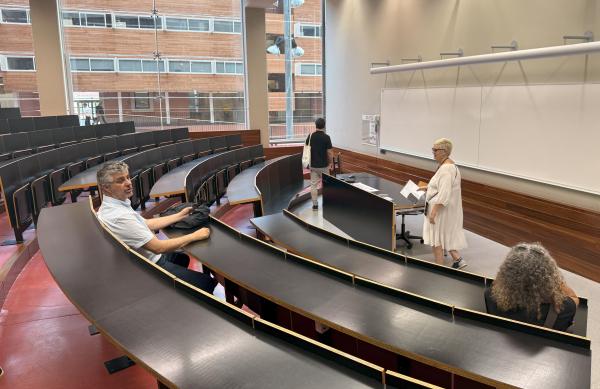
At its center is a large, covered courtyard linking the historic building with a modern lecture-hall complex. A glass, aluminum and iron roof allows natural light to flood the space, while a four-story glass façade looks onto the courtyard from the adjoining building. Eighteen lecture halls on three levels will provide rooms for most of the scientific sessions, including a large lecture hall seating around 250 people.
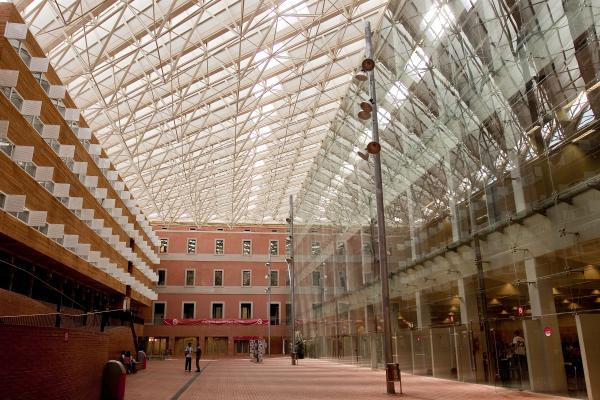
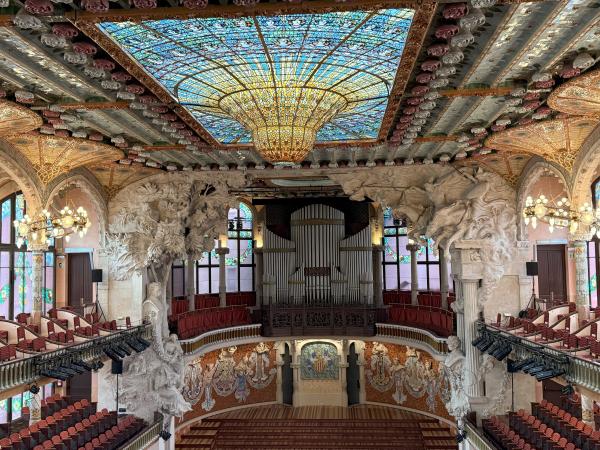
The courtyard itself immediately suggested possibilities for the Conference. Large enough to accommodate exhibits, poster displays, coffee breaks and lunches, it should become one of the main gathering places for IPC participants — somewhere to continue conversations after sessions, meet colleagues and browse posters and exhibits. An adjoining auditorium seating around 350 people will provide a venue for plenary sessions and offers exhibit space. During the visit we also explored several off-campus options for the opening and closing ceremonies, when we expect a much larger audience.
From a water reservoir to a university library
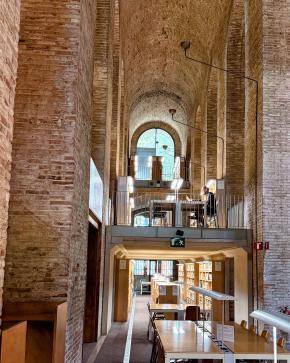
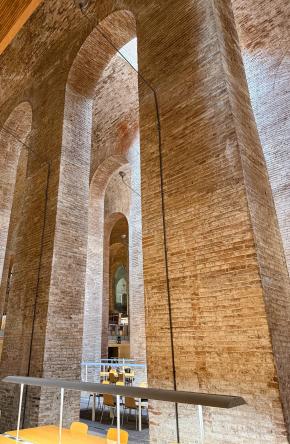
One of the architectural highlights of our campus tour was the Dipòsit de les Aigües, now home to the UPF library, which will be available to conference participants seeking a calm quiet place to work or rest.
The building was originally constructed in the nineteenth century as a water reservoir for Barcelona's Parc de la Ciutadella. Designed by architect Josep Fontserè, with a young student, Antoni Gaudí, contributing to the structural calculations, it was transformed more than a century later into a university library.
Dipòsit de les Aigües – interior. Walking into the structure is an experience. Rows of massive brick arches create a vast, cathedral-like interior. The modern library has been inserted into the historic structure keeping the extraordinary sense of scale of the original reservoir. It is a striking example of the way UPF's Ciutadella campus has given new life to Barcelona's nineteenth-century architecture.
That combination of old and new is visible throughout the campus, which also includes a collection of contemporary art, should give IPC2029 a very different atmosphere from a conventional conference centre.
Barcelona beyond the conference rooms
The Ciutadella campus is also well placed for experiencing Barcelona outside conference hours. It sits beside Parc de la Ciutadella, within easy reach of the historic center and the neighbourhoods of El Born and the Gothic Quarter. Barcelona's extensive public transport system makes the campus readily accessible from other parts of the city.
The surrounding area was substantially redeveloped in connection with Barcelona's 1992 Olympic Games and today is a residential neighbourhood with restaurants, cafés and small shops. And for those looking for somewhere to cool down after a long day of scientific sessions, Barcelona's waterfront and beaches are within walking distance.
Walking through the lecture halls, courtyards and historic buildings of the Ciutadella campus, it was already possible to imagine IUSSP members presenting research, discussing posters, and meeting with colleagues.
IPC2029 may still be three years away, but Barcelona is beginning to feel real. The International Organizing Committee for the Conference will meet in early 2027 to put together the Call for Abstracts for IPC2029. In preparation for that meeting, IUSSP members are warmly invited to submit suggestions for session topics to be included in the Call for Papers. 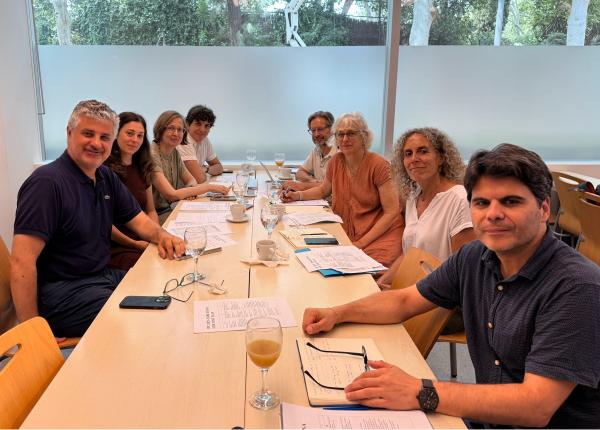
|