
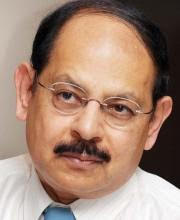
Iqbal Shah died in Geneva, Switzerland on 28 December 2025. A long-time and active IUSSP member, he had joined the IUSSP in 1990. He participated in many IUSSP activities and chaired the IUSSP Scientific Panel on Reproductive Health (2011-2014).
Originally from Pakistan, Iqbal Shah received his early education in Pakistan and his post-graduate degrees at Johns Hopkins University and the University of Brussels. He started his career at the World Fertility Survey in London (1982-1985), where he worked with the team analysing trends in fertility and its components.
From 1985 to 2012, Iqbal served at WHO’s Human Reproduction Programme (HRP) and Department of Reproductive Health and Research (RHR) in various capacities. For over a decade, he was the Team Leader for RHR’s Preventing Unsafe Abortion group, and Responsible Officer managing the department’s activities in Social Science and Operations Research in Sexual and Reproductive Health. At WHO, he shaped RHR’s social science research and capacity building activities on under-researched topics in low and middle income countries. Over this period, his work contributed hugely to building social science research on wide-ranging aspects of sexual and reproductive health and rights. He spear-headed research initiatives on topics ranging from the determinants and consequences of unsafe abortion to contraceptive use dynamics in developing countries, the dual risk of unwanted pregnancy and HIV infection, adolescent sexual and reproductive health, the role of men in reproductive health, quality of care in reproductive health and more.
Iqbal was passionate about ensuring women’s right to safe abortion. At WHO his contributions in the area of preventing unsafe abortion were particularly path-breaking and noteworthy. He played a key role in the development of WHO’s first-ever guidance on safe abortion, a guidance manual, periodically revised, that sets out the path to improving access and safety for women globally. Together with Elizabeth Åhman, he produced global and regional estimates of the incidence and trends in induced abortion, both safe and unsafe. He pioneered, together with Ina Warriner and others, a study demonstrating the feasibility of providing first-trimester abortion by mid-level health care providers in low resource settings. Together with Mary Beth Weinberger, he edited the 2012 Supplement of the International Journal of Gynaecology and Obstetrics on improving access to medical abortion in developing countries.
From 2011-2014, Iqbal was Senior Advisor/Consultant, Research, Monitoring and Evaluation Unit, the Susan Thompson Buffett Foundation, Omaha, supporting activities related to the establishment of a Center dedicated to reproductive health research and evaluation, evaluating proposals, reviewing research and evaluation studies in reproductive health, and assessing the impact of vouchers schemes on enhancing access to sexual and reproductive health services. From 2014 to 2021, he worked as Principal Research Scientist, and from 2021 onwards, Visiting Scientist at the Department of Global Health and Population, Harvard T.H. Chan School of Public Health, Boston, where he served as the Principal Investigator of two large multi-country family planning projects. At Harvard, he continued conducting research on sexual and reproductive health matters, as well as mentoring students, giving lectures and presentations, and participating in various technical advisory committees.
Since 2021 until the present, he devoted time to work in his native country Pakistan, collaborating closely with Dr. Zeba Sathar and colleagues at the Population Council. He was deeply committed to advancing women’s health and addressing Pakistan’s daunting demographic challenges. Iqbal played a major role in the complex Pakistan Maternal Mortality Survey 2019, contributed to the study on Safeguarding women’s health in Pakistan, and co-authored the article estimating induced abortion in Pakistan with Zeba Sathar, Susheela Singh and colleagues. At the time of his passing, he was working on the Sindh Health and Population survey report.
Iqbal Shah became a member of IUSSP in 1990. Over the years, he contributed in many ways to its activities. Notably, he played a key role in the seminar on “Low Fertility and Reproductive Health in East and Southeast Asia” organised by the Scientific Panel on Policies in the Context of Low Fertility, held in Tokyo in November 2008 and co-edited the resulting IUSSP Springer volume Low Fertility and Reproductive Health in East Asia. International Studies in Population, with Naohiro Ogawa (2014). During 2011-2014, he chaired IUSSP’s Panel on Reproductive Health. This was an active Panel that held several seminars (Bangkok, Thailand; Kochi, India; and Nanyuki, Kenya), and published the 2015 Special issue of Studies in Family Planning (vol 46, issue 4) entitled "Postpartum and Post-Abortion Contraception: From Research to Programs", co-edited by Iqbal, together with K.G. Santhya and John Cleland.
In the course of his career, Iqbal travelled widely and collaborated extensively with scientists and policy makers from a number of countries in every region of the world. He had an enormous publication record, mentored countless colleagues and early career researchers from low- and middle-income countries in Africa, Asia and Latin America. In 2016, he received The Marjorie C. Horn Operations Research Award from USAID in recognition of his efforts to build the capacity of social science researchers in developing countries, expand the global evidence base on key sexual and reproductive health issues and accelerate change in policies and practices that improve the health, wellbeing and human rights of women and men around the world.
What we remember most, however, is his kindness to and respect for all, his wisdom, his ability to listen to and accommodate diverse perspectives, his humility, his ready laugh and infectious sense of humour, and his generosity of spirit. Iqbal remained a principled human being, never bagging the limelight while sharing his wisdom and time generously. He was not only a humane scientist dedicated to improving women’s health and rights but a mentor and caring friend to so many.
Iqbal touched many lives. He leaves a lasting impression on all who had the privilege of working with him. We mourn the loss of this extraordinary human being and celebrate the life of an individual who has touched many lives in so many ways.
Dr Iqbal Shah is survived by his wife Okyang Jade Kim, son Daniel Kim Shah, his sisters, Habibah Makhdum and Sabiha Makhdum and brother Najam Hasan. We share their loss.
Prepared by:
Dr Shah’s former team members at WHO, Shireen Jejeebhoy, Ina Warriner, Nicky Sabatini-Fox, Sarah Bott
Dr Shah’s colleagues at the Population Council, Islamabad, Zeba Sathar and Ali Mir