
Demographic and Health Consequences of Violence and Armed ConflictRostock, Germany, 1–2 July 2025
Organized by:
Armed conflict and organized violence profoundly disrupt population structures, health trends, and mobility patterns. Moreover, the tumultuous events of war can make data collection prohibitive, presenting critical challenges for demographic research. Understanding the population and health consequences of violence and armed conflict requires nuanced theoretical frameworks, robust methodological approaches, and benefits greatly from multidisciplinary collaborations and novel statistical methods.
The aim of the symposium on Demographic and Health Consequences of Violence and Armed Conflict was to to present original research examining the short- and long-term impacts of armed conflict and violence on mortality, migration, fertility, the environment, and population health and to provide a safe space for critical dialogues on conflict and conflict research.
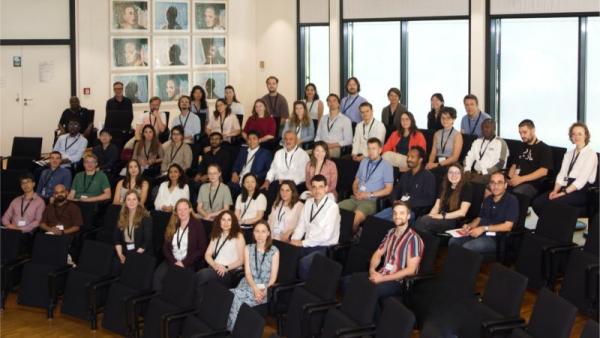
The event featured scholars from a variety of disciplines, including demography, public health, sociology, political science, and economics. The programme included 2 keynotes - one by Rita Giacaman (Birzeit University, Palestine) and one by Patrick Heuveline (University of California, Los Angeles), 21 regular presentations, a poster session including 11 posters and a Social Networking Event. There were approximately 70 in-person participants, roughly half of them from European or North American institutions and the remainder from Asian, African and Middle Eastern institutions.
A recurring theme of the talks and conversations was how different each war context is. Keynote speaker Rita Giacaman’s talk emphasized the importance of acknowledging and accepting the lived experience of people affected by war rather than trying to homogenize war under one theoretical umbrella. She offered examples of how her team has developed, tested, and validated new tools to appropriately capture the lived war experiences of people in Gaza. Another recurring theme was data scarcity. Data collection both during and after war is fraught with difficulty and the resulting data are often incomplete, of questionable quality, or too narrowly focused (e.g., counting war events or war deaths). Several presenters discussed possible approaches for mitigating poor quality data while also calling for innovations to help move the work forward.
 |