EPC2026 workshop on Global Perspectives in Lifetime Migration Data InfrastructuresBologna, Italy, 3 June 2026
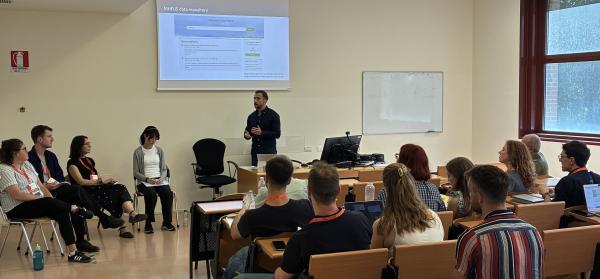
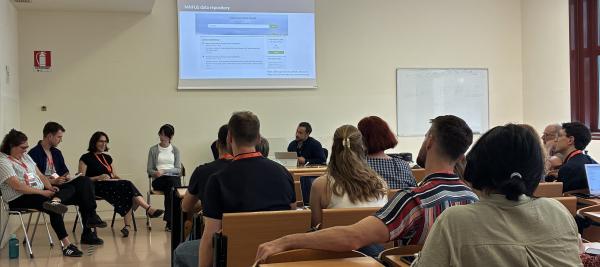
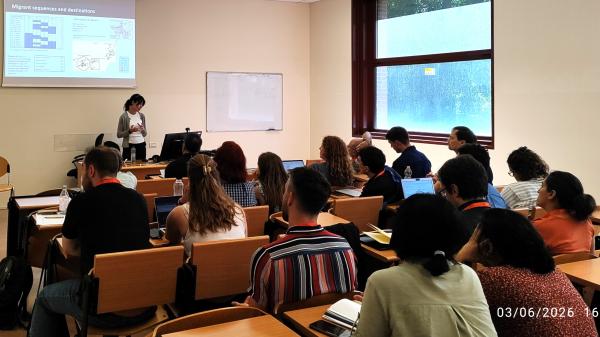
The IUSSP Scientific Panel on Lifetime Migration organized a workshop on “Global Perspectives in Lifetime Migration Data Infrastructures” on 3 June 2026 as a side event of the European Population Conference held at the University of Bologna. The workshop brought together researchers working on innovative longitudinal and linked data infrastructures that are transforming the study of migration by enabling scholars to conceptualize mobility as a dynamic life-course process rather than as a single event.
The event was attended by 25 participants and provided an opportunity to discuss emerging data sources from different world regions and data types, as well as the methodological and institutional challenges involved in building sustainable migration data infrastructures. The workshop formed part of the panel’s ongoing efforts to promote life-course approaches to migration research.
The workshop was moderated by Panel chair Sergi Vidal (CED-CERCA / Universitat Autònoma de Barcelona) and featured four presentations showcasing innovative data infrastructures from diverse geographical contexts. Elizabeth Jacobs (University of Connecticut, USA) demonstrated how LinkedIn employment histories can be used as a novel source of digital trace data to reconstruct migration and mobility trajectories. Niklas Murken (Universität Potsdam, Germany) discussed the design and implementation of the Senegal Migration Panel Study. Victoria Prieto (Universidad de la República, Uruguay) illustrated the potential to study intra-Latin American mobility using data from the Latin American Migration Project. Finally, Carren Ginsburg (University of the Witwatersrand, South Africa) presented a longitudinal cohort study of internal migration in South Africa, illustrating the opportunities and challenges of following highly mobile populations among rural communities.
The presentations highlighted several examples of what may be considered next-generation migration data infrastructures, including longitudinal surveys, digital trace data, and internationally harmonized migration datasets. At the same time, the workshop encouraged a critical reflection on the limitations of existing systems. During the moderated discussion, participants reflected on persistent challenges related to identifying and monitoring migrants over time, maintaining longitudinal follow-up among mobile populations, and ensuring that migration data adequately capture the temporal complexity of mobility trajectories. Particular attention was given to the difficulties of observing migration as a life-course process and to the risk that many existing infrastructures continue to miss important dimensions of mobility, especially among highly mobile, vulnerable, or transnational populations.
 |