Epidemics, Gender, and Public Institutions in the 19th and 20th CenturiesPalma (Majorca), Spain, 2–3 July 2026
Organizers:
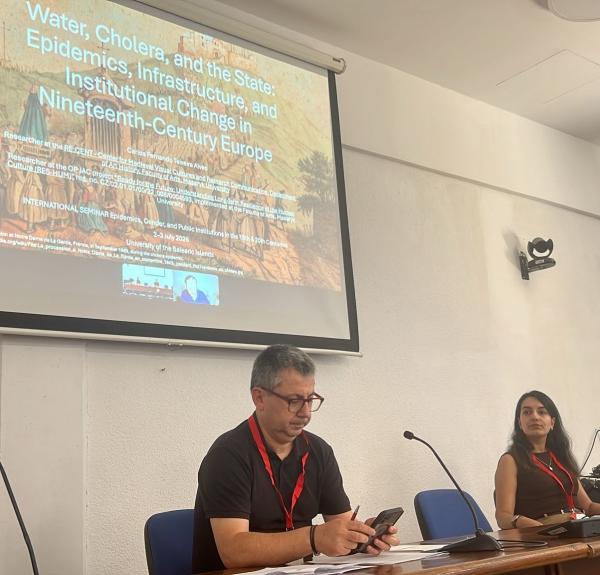
The International Seminar “Epidemics, Gender, and Public Institutions in the Nineteenth and Twentieth Centuries”, organized under the auspices of the IUSSP Scientific Panel on “Epidemics and Contagious Diseases: The Legacy of the Past”, was held on 2–3 July 2026 at the Faculty of Philosophy and Arts of the University of the Balearic Islands (UIB).
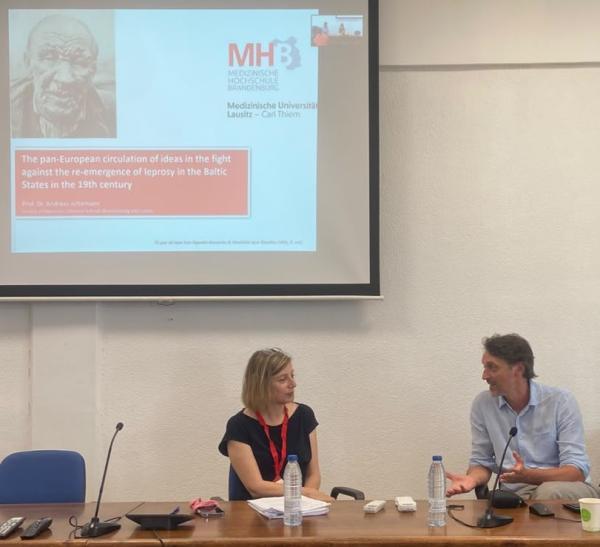
The seminar brought together historians, demographers, and public health researchers at different career stages, ranging from master’s students and early-career researchers to established professors. The programme comprised 7 sessions, in which a total of 19 research papers were presented. The speakers represented a wide geographical range, with participants from Spain, Italy, Portugal, France, Germany, Iran, and Uruguay. In total, 30 people attended the seminar. The seminar’s main objective was to examine the consequences of epidemics from a multidimensional and long-term perspective, addressing their social, political and administrative, cultural, urban, and gendered dimensions. While historical demography and the broader historiography of epidemics have traditionally focused on overall mortality levels and mortality crises, the ways in which epidemic dynamics interacted with public administration, socioeconomic inequalities, and gender roles have received comparatively less systematic attention.
The seminar’s scientific contribution can be summarised through four major analytical pillars, which capture its main intellectual contributions and the broader implications of the discussions.
1. The Strengthening and Centralisation of the State through Infrastructural Stress
One of the most robust theoretical consensuses of the meeting was that health crises operated as moments of infrastructural stress (Alves; Fernandes Gonçalves; Moring). This phenomenon forced the modernisation of urban governance and the progressive consolidation of the liberal state (Cea). In this regard, the institutionalisation of expert and/or technical knowledge was of great importance, particularly knowledge related to health professionals (Jüttemann). Secondly, the tension between administrative centralisation and local fragmentation was progressively resolved in favour of the centre (Coromina). A certain inertia in sanitary and social control measures was also evident. These measures outlasted scientific advances and, specifically, the emergence of microbiology. The use of sanitary cordons during the COVID-19 pandemic illustrates how these historical mechanisms continued to shape the management of epidemics (Puharić et al.).
2. The Anatomy of Inequality: Labour Markets, Gender, and “Urban Penalties”
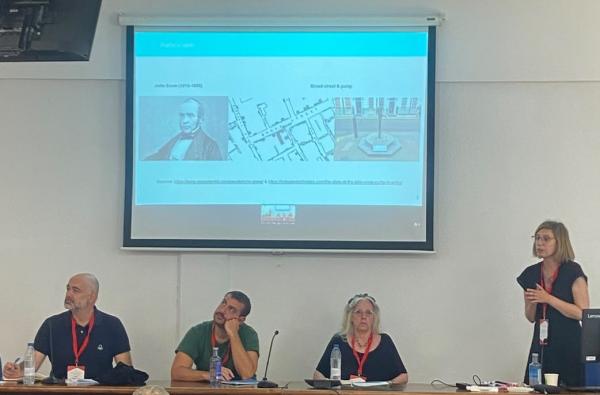
The spread of pathogens deepened class and gender inequalities. As demonstrated by the paper on the 1865 Palma epidemic, cholera mortality was strongly influenced by gender roles and patterns of exposure to contagion (Pujadas-Mora et al.). At the same time, the geography and urban structure of the city shaped the spatial distribution of infection, with the analysis identifying contaminated water sources as important sites of transmission. This was also accompanied by the specificity of urban penalties. In Belgium, for example, specific industrial structures meant that very different groups, such as girls in the city of Bruges and young men in the ports of Antwerp and Brussels, experienced asymmetrical mortality rates during the same epidemics (Devos). Similarly, equal inheritance legislation introduced by the liberal government following the French Revolution from 1793 onwards may have had negative unintended consequences. Specifically, in contexts of extreme poverty, girls experienced alarmingly high excess mortality (d'Amelio et al.).
3. The Clash of Epistemologies: The Tension between “Popular Truth” and Institutional Science
The seminar devoted substantial attention to the sociocultural dimensions of health, examining the divide between the scientific diagnoses produced by state institutions and the mental and ideological representations of the communities concerned. Particular emphasis was placed on the dangers posed by academic orthodoxies in pre-microbiological scientific contexts, as illustrated by the Italian case discussed by Tanturri. Conversely, even in a context firmly shaped by bacteriology, popular beliefs and the search for scapegoats continued to prevail, as illustrated by the case of Santa Margalida (Mallorca) in 1928 (Escales et al.).
4. Modern Infrastructures as Vectors of Disease Transmission
Finally, several papers highlighted the paradox of modern progress: the development of rapid communication networks and the industrial dynamics of the liberal era provided efficient channels for the spread of disease. This was reflected in the increased mobility and accelerated transmission that facilitated the spread of cholera, as highlighted by Zahra Behrouz Moghadam et al. Similarly, the connection between coastal industrialisation and railway networks was demonstrated by the 1885–1886 epidemic in Finistère, France, a case examined by Jean-Marie Le Goff.
Acknowledgements: 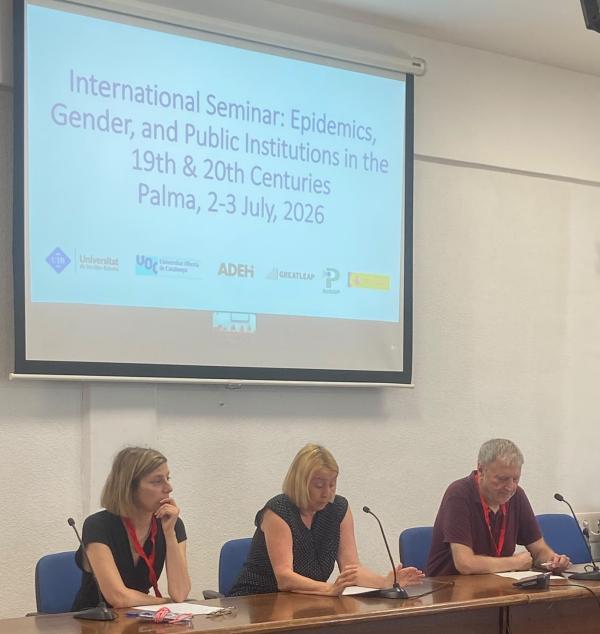
|