| Printable PDF version |
|
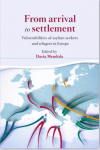
In this issue: Forthcoming IUSSP Council Meeting ● Toward a Demography of Crisis and Resilience ● Bringing a Rights, Justice and Person-Centered Lens to FP Measurement ● Climate Change, Environmental Hazards and Population Dynamics ● Demographic and Health Consequences of Violence and Armed Conflict ● Forthcoming IUSSP Debate: When Populations Shrink - Should States Encourage Births or Adapt? ● Free online training in Demographic Methods and Population Analysis ● N-IUSSP E-Book ● Members News ● Opinion article – An opportunity to reform the DHS model ● New: IUSSP members' blogs ● Members' new publications ● In memoriam – Iqbal Shah ● New IUSSP members ● Regional Population Associations ● Other Announcements ● N-IUSSP ● Calls for papers ● Training courses and workshops ● Career and study opportunities ● Calendar Forthcoming IUSSP Council Meeting The newly elected IUSSP Council will hold the first meeting of its four-year mandate on 7–8 April at IUSSP Headquarters, hosted by INED on the Condorcet Campus in Aubervilliers, in the Paris region. The Council will discuss priorities for the Union, including the review of new Scientific Panels and activities, preparations for IUSSP’s centenary in 2028, and early planning for the International Population Conference (IPC2029) in Barcelona, Spain. IUSSP activities Toward a Demography of Crisis and Resilience  Crises and shocks are reshaping population dynamics worldwide – from climate disruption and forced displacement to conflict, pandemics, and economic upheaval. What do these shocks mean for fertility, family life, migration, and health? And how can demographers support policy and crisis response when data is incomplete, delayed, or unreliable? This lively roundtable held on March 3rd, with 5 speakers – Roman Hoffmann, Orsola Torrisi, Natalie Nitsche, Cassio Turra and Arnstein Aassve – explores both short-term emergencies and longer-term demographic consequences. Bringing a Rights, Justice and Person-Centered Lens to FP Measurement  The IUSSP Scientific Panel on Rethinking Family Planning Measurement with a Reproductive Justice and Rights Lens has been working for the last three years to help strengthen measurement of the need for and use of family planning. This presentation at the “Lundis de l’INED” lecture series on 16 March 2026 entitled "Rethinking Global Family Planning Measurement: Bringing in a Rights, Justice and Person-Centered Lens" provides a summary of the Panel’s work and important advancements being made in family planning measurement. Climate Change, Environmental Hazards and Population Dynamics  Under the umbrella of the IUSSP Scientific Panel on Population Dynamics under Global Conflict and Climate Change, the Max Planck Institute for Demographic Research (MPIDR) hosted on 11–12 November 2025 a Conference on Climate Change, Environmental Hazards and Population Dynamics. The aim of the conference was to discuss how climate change and environmental hazards shape population dynamics through their effects on health, mortality, migration, and fertility. Demographic and Health Consequences of Violence and Armed Conflict  The aim of the symposium on Demographic and Health Consequences of Violence and Armed Conflict, held at MPIDR in Rostock, Germany on 1-2 July 2025 was to to present original research examining the short- and long-term impacts of armed conflict and violence on mortality, migration, fertility, the environment, and population health and to provide a safe space for critical dialogues on conflict and conflict research. The event featured scholars from a variety of disciplines, including demography, public health, sociology, political science, and economics and included two keynotes - one by Rita Giacaman and one by Patrick Heuveline. Forthcoming IUSSP activities IUSSP Debate: When Populations Shrink - Should States Encourage Births or Adapt? 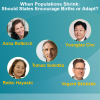 Join us for a high-level virtual debate on April 1st, 2026 at 11 am UTC around the question: "Should nations with more deaths than births implement or increase incentives for childbearing and subsidies for child-rearing?" With opening insights on the question from Tomas Sobotka four world experts: Anna Rotkirch (Finland) & Reiko Hayashi (Japan) for the "Yes" team and Youngtae Cho (South Korea) & Vegard Skirbekk (Norway) for the "No" team. Training Free online training in Demographic Methods and Population Analysis  The Population Studies Group at the London School of Hygiene and Tropical Medicine published a self-study course Introduction to Demographic Methods and Population Analysis for students and professionals. This course contains 28 interactive lectures, grouped into 3 modules. Topics include the very basics of the measurement and analysis of fertility, mortality and migration, but also cover population projections, life table applications, and population models. No prior training in demography or mathematics is required, and students can elect to focus on a selection of the sessions only. These materials were developed in 2014-2015 for IUSSP with financial support from the United Nations Population Fund (UNFPA), the updated course is now made available through LSHTM’s Open Study platform. IUSSP Publications From arrival to settlement. Vulnerabilities of asylum seekers and refugees in Europe, N-IUSSP, 2026. Edited by Daria Mendola. (Download the E-Book for free) Members News
Opinion article co-written by several IUSSP members on the future of the Demographic and Health Survey, a topic of importance to many IUSSP members:
An opportunity to reform the DHS model 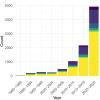 An Opinion piece published in the Proceedings of the National Academy of Sciences (PNAS) argues that “In the wake of USAID cuts, we can create a Demographic and Health Survey (DHS) Program founded on more equitable data infrastructure and stronger research integrity.” New: IUSSP members' blogs. Do you have a blog or podcast on population issues that you would like to share with IUSSP members? Please send information to the IUSSP Secretariat (contact@iussp.org) for inclusion in the next Bulletin.
Demography Matters – by Apoorva Jadhav  IUSSP member Apoorva Jadhav – former lead demographer at USAID and current Senior Fellow at the Population Reference Bureau, Non-Resident Scholar at the Carnegie Endowment for International Peace's South Asia Program, and Consultant at the William. H. Gates Sr. Institute at Johns Hopkins University's Bloomberg School of Public Health – has launched a new Substack newsletter titled Demography Matters. At a time when demographic trends have become a battlefield for misinformation and alarmist rhetoric, Apoorva is on a mission to bridge the gap between dense academic research and the public’s understanding of global change. Demography Matters translates rigorous population data and research into approachable, actionable, and engaging narratives for a non-technical audience. The newsletter’s signature feature is the Demographic Polar Twins series: Every week throughout 2026, Apoorva will explore 25 core indicators by pairing countries at demographic opposites, revealing the human stories and complexities behind the statistics. (To read more about this blog and to subscribe, click here)  IUSSP member Rebecca Sear (Brunel University London) is a demographer, an anthropologist and a human behavioural ecologist who uses an interdisciplinary approach to understand human behaviour, incorporating an evolutionary theoretical framework into her research. She works on questions of demographic and public health interest, including fertility and reproductive development, child health and mortality, and health inequalities, and has a particular interest in the family and how family relationships influence these outcomes. She is also increasingly interested in issues related to research integrity, especially related to scientific racism and the resurgence of eugenics. Rebecca Sear has held a blog since 2019. (To read this blog, click here) Budgeting sensitive to demographic dividend: principles, methods and applications, Latif Dramani [English & French versions] • Iqbal Shah (1950–2025)  Iqbal Shah died in Geneva on 28 December 2025. A long-time and active IUSSP member, he had joined the IUSSP in 1990. He participated in many IUSSP activities and chaired the IUSSP Scientific Panel on Reproductive Health (2011-2014). Five new Members and 4 new Student Associates joined the IUSSP between 1 December 2025 and 28 February 2026. Please encourage your colleagues and students to become members. (See list) Regional Population Associations XXIII International AIDELF Conference
2026 PAA Annual Meeting in St-Louis, MO
The European Population Conference 2026 will convene in Bologna, Italy, 3-6 June. Come visit the IUSSP booth if you are attending EPC 2026.  The Asian Population Association (APA) is pleased to announce that its 7th Asian Population Association Conference (7th APAC) will be held in Hanoi, Viet Nam, 24-27 November 2026. The conference is organized in collaboration with the Vietnam Union of Science and Technology Associations (VUSTA) and the Vietnam Population Association (VNPA). Deadline for submission of paper or poster abstracts extended to 15 April 2026. 2026 ALAP congress in San Jose, Costa Rica
The XII Congress of the Latin American Population Association (ALAP) will take place in San José, Costa Rica, 24-28 August 2026 on the theme "New Frontiers: Demography, Digital Revolution, Democratization of Information and Dialogue in the Americas". (Read more on the ALAP website) Other Announcements A revitalization of the DHS Program  The Demographic and Health Surveys (DHS) Program is back! High-quality, accessible, and actionable data that inform health and development efforts locally and globally. New surveys are underway, collecting population-based demographic, health, and nutrition data that are comparable across countries and over time. New datasets are available (for free) to researchers, programmers, and policymakers. Targeted innovations are in progress to enhance data quality and streamline survey processes. New funding models are being explored to support partner countries’ data needs and the long-term future of the DHS Program. Data from all 470+ DHS Program surveys are accessible at dhsprogram.com. European Parenting Leave Policies Dataset  The new European Parenting Leave Policies (EPLP) Dataset provides (for free) harmonised information on maternity, co-parent, paid parental, and job-protected leave regulations across 21 European countries from 1970 to 2024. It focuses on statutory entitlements that shape how long birth mothers and co-parents can take leave around childbirth, enabling comparative analyses of policy developments, cross-national differences, and the impact of major reforms on families and labour markets. The dataset includes 33 variables on leave duration, benefit generosity, flexibility, and incentives for sharing leave, and is accompanied by detailed documentation (codebook, country reform timelines, definitions, and data collection guidelines).  Each Friday from 12:30-1:30pm Pacific Time, the Center for Studies in Demography and Ecology (CSDE), University of Washington's Seminar Series brings top demographers and population health scientists from around the world to a classroom near you. CSDE’s seminars are predominantly in a hybrid format. See the full list of seminars in the Spring 2026 Seminar Schedule. If you missed a CSDE seminar you can watch recordings of past seminars. Population and its Early-Career Prize
European Doctoral School of Demography
The European Doctoral School of Demography (EDSD) is a fully funded 11-month program for Master's degree students in demography or related fields. Courses are taught in English and focus on developing students' quantitative and programming skills. In 2026-2027, the program will be held in 2 locations: MPIDR, in Rostock, Germany (Sept-Oct) and the SGH Warsaw School of Economics, Poland (Nov-July). Deadline for applications: 27 March 2026 (at noon, CET). Master’s Programme in Global Demography, University of Vienna
The University of Vienna Master Programme on "Global Demography" will welcome its next cohort on 1 October 2026. The principal aim of this two-year English language Master’s Programme is to give students a strong scientific grounding in the analysis and forecasting of demographic developments across the globe – in particular, fertility, mortality, and migration trends as well as human capital formation. Deadline for applications: 7 April 2026. Rutgers School of Public Health SRHRJ MPH  Rutgers School of Public Health is accepting applications for our new Master of Public Health (MPH) in Sexual and Reproductive Health, Rights, and Justice. Applications are being reviewed on a rolling, space-available basis, and we encourage interested candidates to apply. This 100% online program is designed for working professionals and students seeking flexibility. Students may enroll full-time or part-time, and courses are offered in a mixed online format with both live (synchronous) and self-paced (asynchronous) components. N-IUSSP
Calls
Training Training courses and workshops
Career and Study Opportunities Jobs/Fellowships/PhD Positions/Post-Docs
Calendar Forthcoming IUSSP meetings & other events
Submit your announcements Feel free to share news from your institution and region so that we can keep all IUSSP members informed about recent or forthcoming events and opportunities in the population field. IUSSP members are welcome to submit information on conferences, calls for papers, training, career or study opportunities as well as their recent publications or peer-reviewed software for inclusion in the newsletter and IUSSP website. Please send the information to contact@iussp.org and remember to include important dates for application deadlines (and photos when appropriate). Information should be sent by email or in a Word document so that it can be edited. For inclusion in the next Bulletin, please send information by 1 June 2026. We look forward to hearing from you soon. IUSSP Bulletin / Bulletin de l’UIESP Publication Director: Mary Ellen Zuppan, IUSSP Executive Director ISSN: 2427–0059 |